





Introduction — Producer Portraits: Parmigiano-Reggiano Craftsmen in the Province of Modena
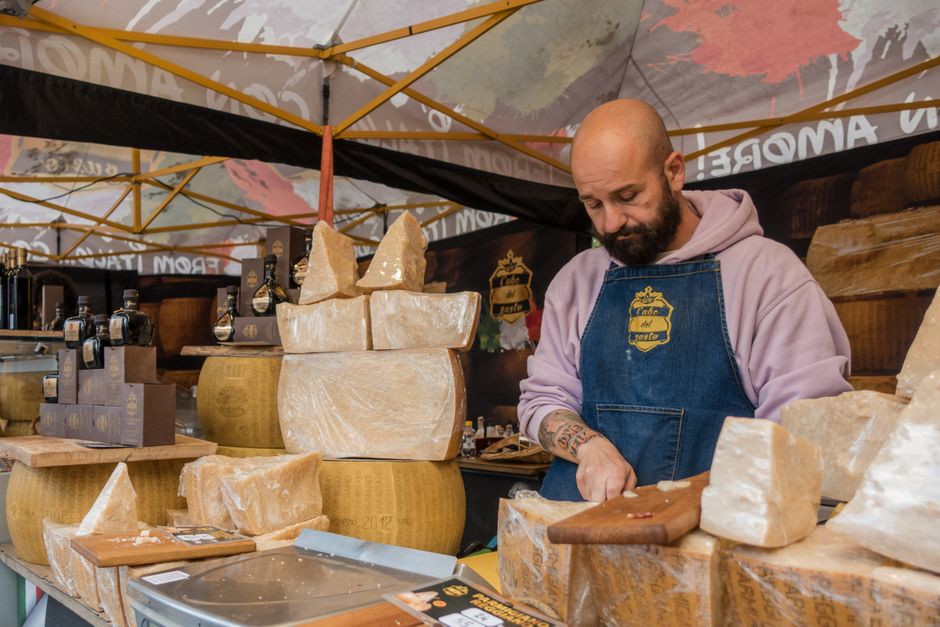
Parmigiano-Reggiano is more than just a cheese; it’s the expression of a place, the result of age-old know-how passed down through generations. Around Modena, in the fertile plains of Emilia‑Romagna, you’ll find farms and dairies where wheels are born, shaped by hand and aged to the rhythm of the seasons. This article is an in-depth, immersive guide to meeting the faces — and the hands — behind these iconic wheels. You’ll find producer profiles, exact addresses, visiting hours, prices, sensory descriptions, local tips and practical itineraries to plan a day trip or short stay dedicated to Parmigiano-Reggiano.
The aim is twofold: to provide useful, practical reading for curious travelers and to pay tribute to artisans who don’t always appear on the usual tourist routes. You’ll meet small family producers, coordinated social dairies and farm operations that open their doors to visitors. Each presents a different approach to production: some highlight local cattle breeds, others focus on pasture quality, eco-friendly herd management, or long aging methods (36 to 72 months) that turn the paste into a complex aromatic world.
The suggested routes include practical information: full addresses (street, number, postal code, town and province), visiting and sales hours, indicative prices for guided visits and for retail purchases (prices in euros), as well as recommendations for tasting and recognizing an authentic Parmigiano-Reggiano. The portraits are written to evoke visual and olfactory atmosphere: you’ll read descriptions of aging rooms, the crackle of salt on the rind, the amber flash of a tyrosine crystal and the snap of a perfectly mature wheel.
At the end of each profile I offer “local tips”: the best time to visit (mornings for milking, late afternoon to see wheels taken into the cellar), dishes to pair (aged Modena balsamic vinegar, local wines like Lambrusco di Sorbara), and useful visitor information (accessibility, whether reservations are required, health rules). Throughout the text, visual cues 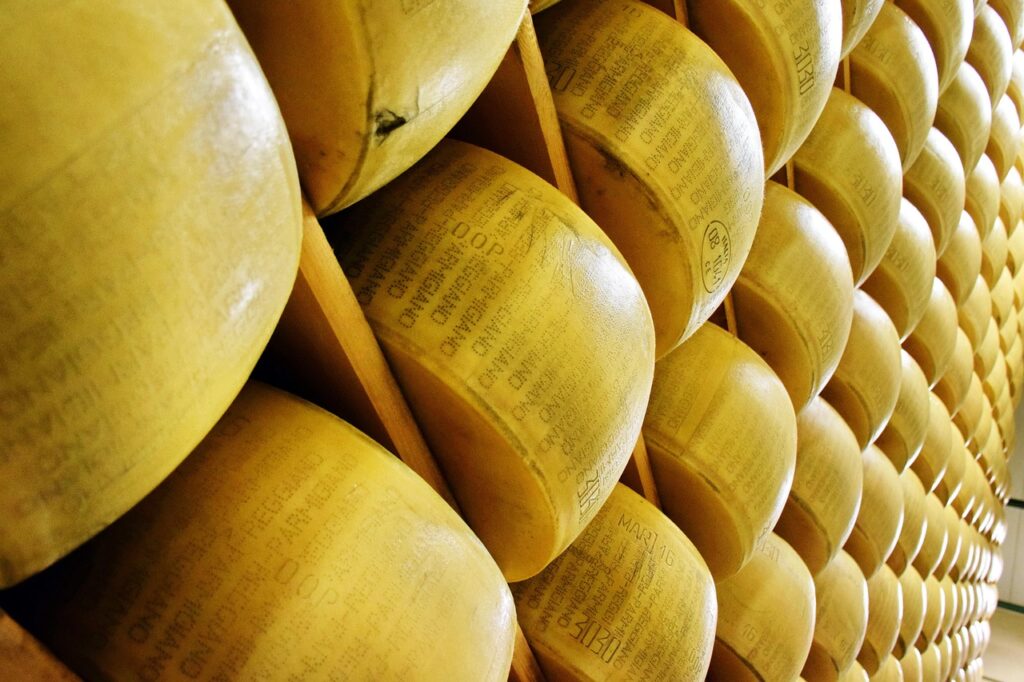 point to the most evocative images you can insert to accompany your travel notes, from the dairy’s façade to the warmly lit aging room.
Caseificio F.lli Bianchi — Family Tradition and Artisan Aging
Address: Caseificio F.lli Bianchi, Via Emilia Est 200, 41123 Modena (MO). Phone: +39 059 123456. Email: [email protected]. Price: guided visit €15 per person (tasting included), retail Parmigiano-Reggiano €16–28/kg depending on aging (12 months = €16/kg, 24 months = €20/kg, 36 months = €28/kg). Hours: shop and visits by reservation Tuesday to Saturday, 09:00–12:30 and 15:00–18:00. Closed Sundays and Mondays.
Caseificio F.lli Bianchi is housed in a renovated old farm to the east of Modena. From the moment you arrive, the brick façade and the small courtyard where pallets of wheels wait set the scene: this is a human‑scale operation. The Bianchi brothers, now the third generation, personally welcome visitors and start the tour in the barn and stalls, where you can see Reggiana cows with their characteristic reddish coats, fed on local hay and a milk ration supplemented with cereals grown on the farm.
The dairy itself is visible from the visitor area: copper and steel vats, freshly poured milk, and the curdling steps explained step by step. The heart of the visit is the aging room, where the air is faintly salty and you can sense the aromatic depth coming off wheels stacked on oak shelves. The Bianchis explain how the rind forms, the importance of warm water washing and salting, and how tyrosine crystals develop — a sure sign of long maturation.
Local tip: book a morning visit to watch the curd being placed into molds, or an afternoon slot to see wheels going into the cellar; bring an insulated bag if you plan to buy a wheel for transport. Nearby: Ristorante Da Gianni, Via Luigi Roversi 34, 41123 Modena (MO), an excellent spot to pair your cheese with a local Lambrusco. Artisanal balsamic vinegar may also be available for purchase in the shop.
Azienda Agricola Tommasi — From Pasture to Wheel: An Agroecological Approach
Address: Azienda Agricola Tommasi, Via G. Di Vittorio 58, 41043 Formigine (MO). Phone: +39 059 654321. Price: farm visit + tasting €20 per person (children reduced €10), educational workshop for adults €35 per person. Direct sales: organic Parmigiano-Reggiano €24–38/kg (24 months €24/kg, 30 months €30/kg, 48 months €38/kg). Hours: visits by reservation on Wednesdays, Fridays and Saturdays, 09:00–17:00; shop open Tuesday to Saturday 09:00–12:00 and 15:00–18:00.
Azienda Agricola Tommasi lies in Formigine, a short distance from Modena. This farm has embraced agroecology: pasture rotations, no silage, integrated pest management and cows fed only on untreated grasses and cereals. The herd — mostly Reggiana and Holstein cows — grazes seasonal pastures and produces milk high in fat, perfect for a creamy, aromatic Parmigiano-Reggiano.
The visit starts with a walk through the fields and the animal housing, followed by a demonstration of mechanical milking (and occasionally hand milking if you’re lucky). The milk is processed on site, and you’ll witness the formation of the first caillebottini (small curd paddles) and the shaping of the wheels. Tommasi emphasizes traceability: you’ll see the logs where every litre of milk is recorded, including the pasture origin.
Tasting profile: their 48‑month wheels give intense notes of toasted hazelnut, candied pineapple and hints of salted caramel, with pronounced crystals. The producer recommends grating younger wheels over fresh pasta or serving thin slices of long‑aged wheels on an appetizer board with 12‑year aged balsamic vinegar or a dry Lambrusco.
Latteria Sociale di Castelnuovo Rangone — Cooperative Spirit and Collective Knowledge
Address: Latteria Sociale di Castelnuovo Rangone, Via G. Matteotti 12, 41051 Castelnuovo Rangone (MO). Phone: +39 059 987654. Price: group guided tour €12 per person (minimum 6 people), school visits €8 per child, cooperative sales €14–30/kg depending on aging. Hours: office and sales Monday to Friday 08:00–13:00 and 14:00–18:00; guided tours by appointment.
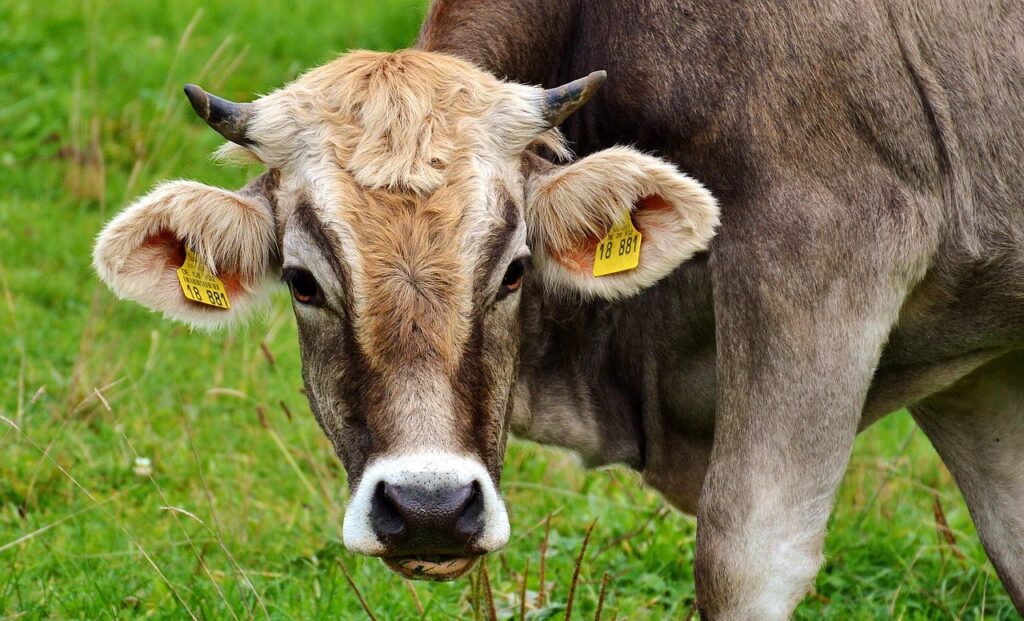
The Latteria Sociale in Castelnuovo is a cooperative that brings together several small local farmers. The collective organization makes it possible to harmonize milk quality and pool aging facilities. On the visit you immediately sense the communal spirit: informational panels on sustainable farming practices, photos of member farmers, and a meeting room where production decisions are discussed.
The cooperative runs training workshops for young producers and stresses the importance of keeping small family farms alive. The visit includes a sensory analysis session: you’ll learn to identify the features of a Parmigiano-Reggiano compliant with the PDO (rind imprint, Consortium mark, paste granularity). The displayed wheels show stamps and markings that guarantee origin and age.
Practical experience: the cooperative offers bulk purchases for restaurateurs and specialty shops, with vacuum packaging on request. For individual visitors, the shop sells cut pieces labeled with their aging date. Tip: arrive early in the morning to watch the milk deliveries from partner farms, and try to visit on a weekday for a quieter experience.
Caseificio La Vecchia Stalla — Small Batch, Long Aging
Address: Caseificio La Vecchia Stalla, Strada delle Valli 7, 41030 Savignano sul Panaro (MO). Phone: +39 059 765432. Price: visit and tasting €18 per person, direct sales €18–40/kg depending on aging (24 months €18/kg, 36 months €26/kg, 60 months €40/kg). Hours: open to the public by reservation Thursday to Sunday 10:00–13:00 and 15:00–19:00.
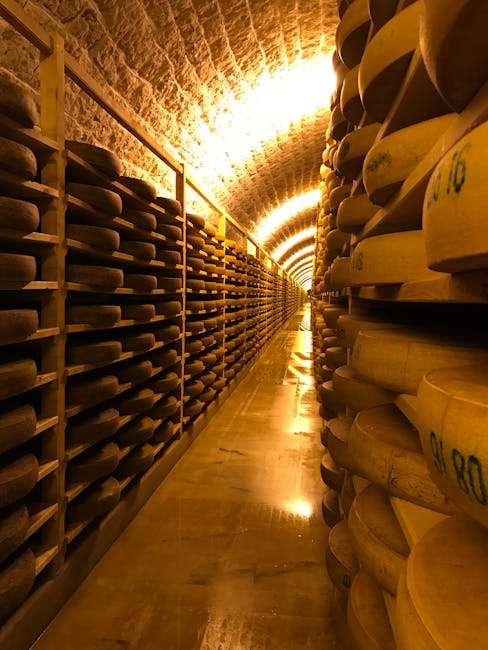
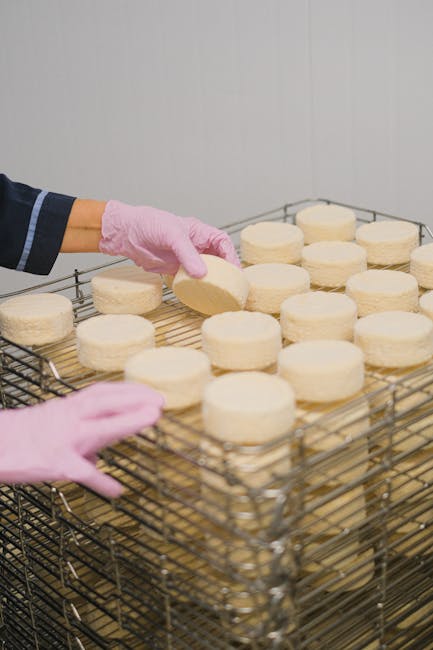
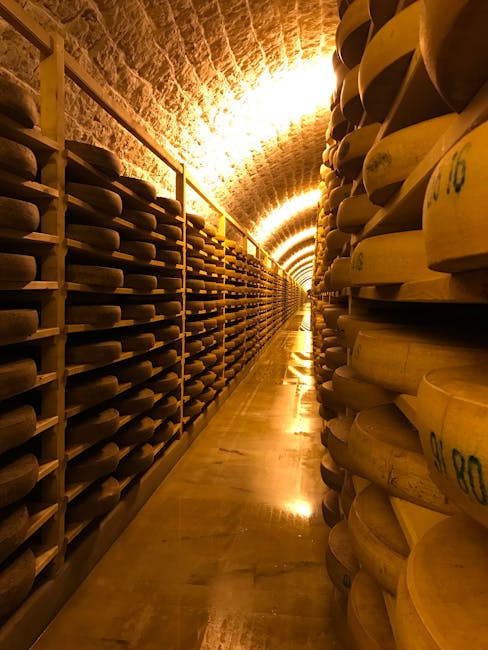
La Vecchia Stalla is literally an old stable converted into an artisanal dairy. Here, wheels are produced in small batches and some are destined for very long aging, exceeding 48 months. The visit is especially immersive: you go through the production room, then down a long corridor that leads to an ancient cellar — carved or fitted into stone structures — where humidity and temperature naturally favor slow aging.
The texture of a 60‑month wheel is unique: an extremely crumbly paste, rich in crystals, pronounced umami notes and a long finish. The artisans explain the rotation protocol for the wheels, the manual brushing and the occasional application of neutral oil to protect the rind. The tour ends with a comparative tasting: young vs long‑aged wheels, served with country bread and homemade pear jam.
Local tip: La Vecchia Stalla sometimes hosts “cheese evenings” by reservation, bringing together local producers (honey, preserves, charcuterie); book at least two weeks in advance. Access: a car is recommended; parking is available on site. Nearby, there’s a viewpoint over the Panaro valley — perfect for a stroll after tasting.
Azienda Agricola Rossi — Educational Farm and Immersive Shop
Address: Azienda Agricola Rossi, Via Provinciale 4, 41012 Carpi (MO). Phone: +39 059 112233. Price: family visit €25 (2 adults + 2 children), private visit €40 per person (cutting workshop and wine pairing), retail €15–32/kg. Hours: shop open daily 09:00–12:30 and 15:00–18:30; guided visits every day by reservation.
Azienda Agricola Rossi has developed offerings aimed at families and school groups: an educational trail explaining the milk chain, a children’s corner to “milk” a fake cow, and a wheel‑cutting workshop. The farm is designed to be accessible and educational, with multilingual panels and safe visitor routes.
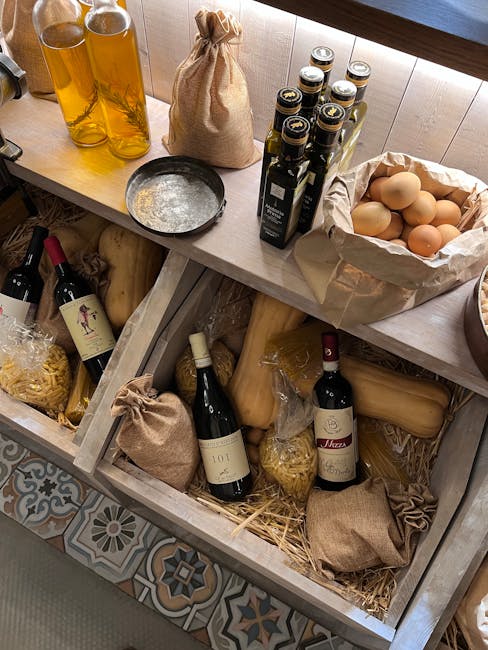
For enthusiasts, Rossi runs an immersive shop where you can buy not only Parmigiano-Reggiano but also complementary products: local olive oil, traditional balsamic vinegar, candied nuts and local wines. The team suggests surprising pairings like 36‑month Parmigiano with fig jam and sparkling rosé Lambrusco. The visit includes a cutting demonstration and tips for storing cheese: ideal temperature 6–8 °C, wrap in special cheese paper, avoid fully airtight plastic.
Local tip: the shop is ideal for gourmet gifts—products are nicely packaged and ready for air travel (small vacuum‑sealed portions). Guides recommend tasting each cheese only after rinsing your palate with water to avoid mixing flavors between ages.
Practical tips for planning your visits around Modena
- Booking: most producers receive visitors only by appointment. Phone numbers and emails are listed above; book at least a week in advance during high season (April–September).
- Transport: a car is recommended for flexibility. The public transport network connects Modena to nearby towns, but schedules can be limited in the evening.
- Budget: plan €12–40 per visit depending on format (group, workshop, tasting). Expect €15–40/kg if you buy a long‑aged wheel.
- Duration: a full visit lasts 1½–2½ hours (production + cellar + tasting). Workshops can last 2–3 hours.
- Language: most visits are in Italian; some offer English guides or translated materials on request.
- Storage: buy vacuum‑sealed portions for long‑distance transport, or ask for advice on insulated packaging.
How to Recognize and Appreciate an Authentic Parmigiano-Reggiano
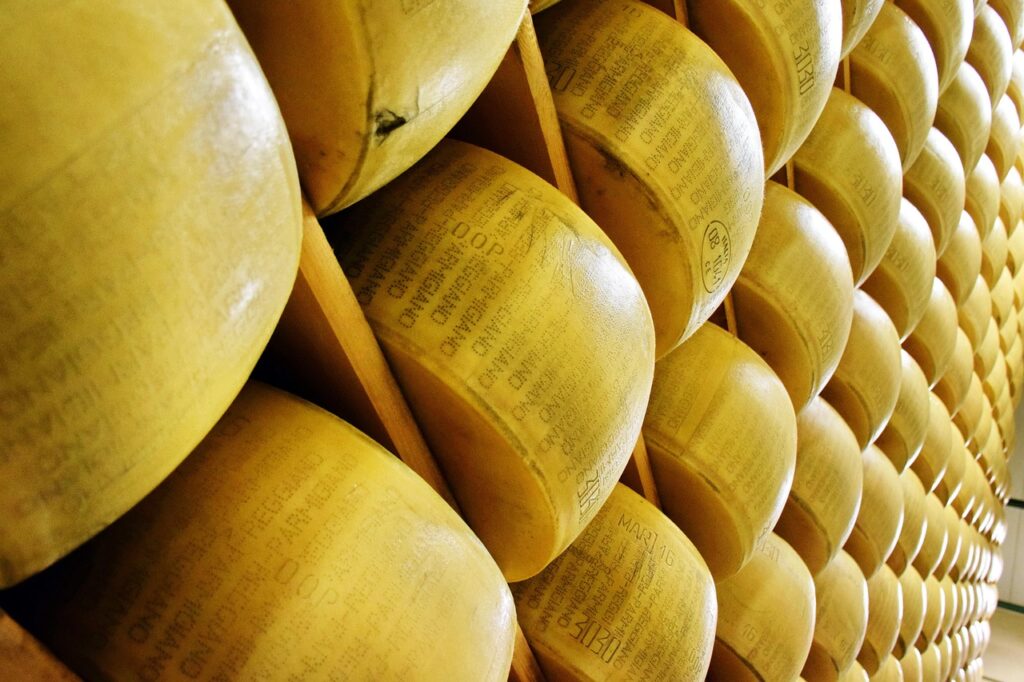
Spotting a true Parmigiano-Reggiano means looking for a few telltale details: the rind should bear the Consortium imprint (roller‑stamped letters) and the wheel number, the paste should be granular and dotted with tyrosine crystals, and the aroma should move from milky notes toward walnut, dried apple and caramel. Young wheels (12–18 months) are milder and creamier; those aged 24–36 months show greater aromatic complexity; beyond 36 months the paste becomes crumblier, more textured and saltier with heightened umami.
During the visits described above, producers will teach you how to “read” a wheel: the smell near the rind, the color of the paste (pale to golden), the sound of a sharp tap on the wheel (which can reveal internal fissures if poorly aged), and the mouthfeel (creamy vs crumbly). A good test is to break off a small piece: the presence of shiny white crystals indicates extended maturation. Artisans will also explain the importance of raw milk (or pasteurization, depending on the producer) and the production calendar: winter milk is richer and often sought after for selected batches.
Pairing suggestions: young Parmigiano-Reggiano with fresh pasta and butter; 24–36 months with risottos or truffled scrambled eggs; >36 months on a cheese board with honey or aged Modena balsamic (12–25 years); 48–60 months grated over gourmet dishes or enjoyed in thin shards. Drinks: Lambrusco di Sorbara (sparkling) for a clean, refreshing counterpoint, or a light Sangiovese for more structure.
Sustainable Practices and Contemporary Challenges for Producers
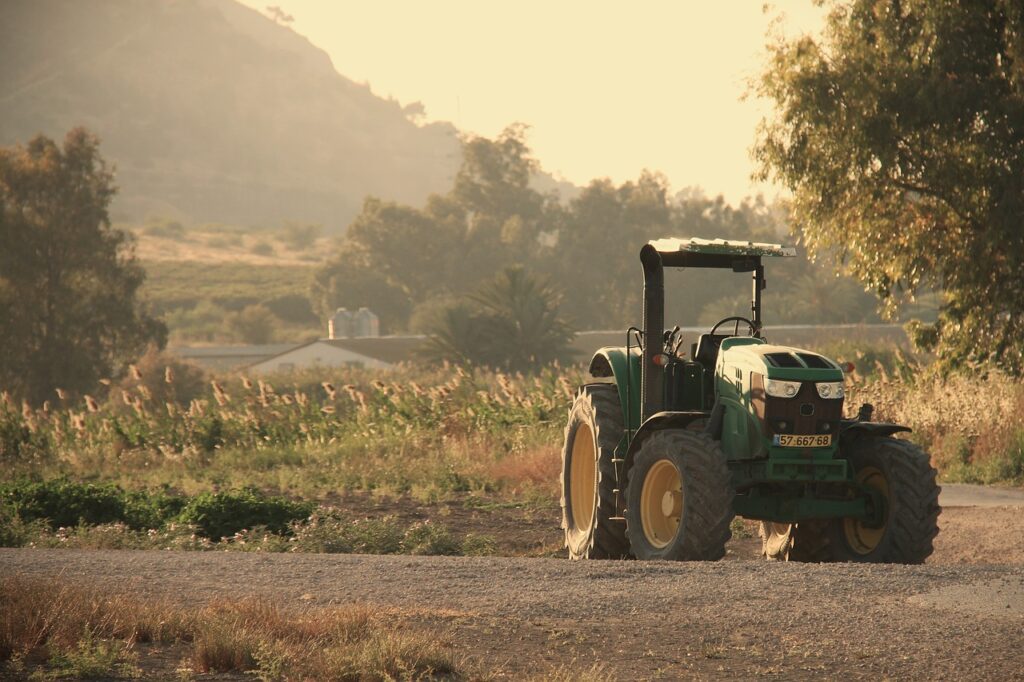
Producers around Modena face several challenges: volatile milk prices, strict health regulations, international competition and the need to keep small farms economically viable. Many are adopting sustainable strategies: local feed, reduced chemical inputs, pasture management and low‑energy aging methods. Some dairies invest in solar panels to power aging systems and use recyclable materials for packaging.
Collective initiatives, like cooperatives, help share aging costs and access to international markets. Digital traceability (QR codes on pieces) is also spreading, giving consumers the ability to trace the batch, the farm and production conditions. The producers featured in this guide — from small artisans to cooperatives — illustrate a clear trend: valuing terroir through quality rather than quantity.
Tip for the responsible traveler: favor direct purchases from producers or cooperative shops, ask about farming and feeding practices, and support local initiatives (workshops, memberships in farm schools). These small actions help preserve the diversity of farms and the long‑term health of the territory.
Conclusion — Embark on a Sensory, Human Journey
Visiting Parmigiano-Reggiano producers around Modena is far more than a culinary trail: it’s an immersion into a cultural, economic and ecological landscape that has shaped Italian cuisine. The portraits here show a variety of approaches — from family farms to cooperatives — but all share a passion for quality and respect for tradition. The addresses, hours and prices let you plan your visits precisely, whether you’re a gourmet traveler, a food professional or a family seeking an educational experience.
To get the most from these encounters, plan ahead, favor mornings for milking operations and afternoons for cellar visits, and don’t hesitate to ask technical questions: artisans often appreciate interest in their methods. Bringing home Parmigiano-Reggiano bought directly from the producer means taking home a living piece of Modena — a product that tells the story of its land and tastes best when you know how it was made.
Finally, keep the practical tips in mind: transport, storage and pairings. Above all, let your senses guide you: observe the paste, inhale the aromatic complexity, listen for the crystals’ crack under your teeth. These shared moments with artisans are at the heart of an authentic journey where taste becomes memory. Enjoy your gastronomic trip — and buon appetito.